
Skip to content
Orthodontics

Braces in Hyderabad

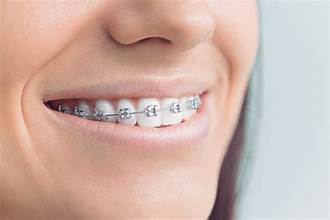
Fixed braces use brackets and wires to gradually move crowded, protruding, or misaligned teeth into a healthier, more functional bite.

Orthodontic braces used to align teeth
BracesOrthodontics
Every 4-8 weeks
Usually not required
Appointment time
60-90 minutes for fitting; 15-30 minutes for adjustments
Review visits
Every 4-8 weeks
Anaesthesia
Usually not required
Recovery
Soreness for 3-5 days after fitting and adjustments
Treatment duration
Usually 12-30 months, depending on complexity
Results
Can remain stable long-term when retainers are worn as directed

Overview

What are braces?

Braces consist of brackets bonded to the teeth and connected by an orthodontic wire. The wire applies gentle, continuous pressure, encouraging the bone around each tooth to remodel so that the teeth gradually move into their planned positions.

Braces can correct crowding, gaps, protruding teeth, and bite problems such as overbite, crossbite, and open bite. Because they are fixed to the teeth, braces can control complex tooth movements that may not always be possible with removable aligners.

Suitability

Is it right for you?

Who May Benefit From Braces?

Braces may be suitable if:

  • Your teeth are crowded, overlapping, or rotated.
  • You have gaps you would like to close.
  • Your upper teeth protrude or your teeth do not meet properly.
  • You have an overbite, crossbite, or open bite.
  • Your child's permanent teeth have erupted and orthodontic treatment has been recommended.
  • You want a predictable treatment that does not depend on wearing removable aligners for 20-22 hours a day.

Children often begin comprehensive orthodontic treatment between the ages of 10 and 14, although the right time depends on dental development rather than age alone. Adults can also have braces, provided their teeth and gums are healthy enough for treatment.

Alternatives to Fixed Braces

Depending on your needs, other options may include:

  • Clear aligners: Removable and less noticeable, but they must usually be worn for 20-22 hours a day and may not be suitable for every case.
  • Ceramic or lingual braces: Alternatives when the visibility of standard metal braces is a primary concern.
  • Composite bonding or veneers: These may disguise mild cosmetic misalignment but do not move the teeth or correct an unhealthy bite.
  • No treatment: A reasonable option when crowding is mild, the bite is healthy, and the appearance does not concern you.

The most appropriate option depends on your teeth, gums, bite, age, treatment goals, and lifestyle. If braces are not the right choice, we will explain the alternatives - including when monitoring the condition without immediate treatment is appropriate.

Options

Types of Braces Available

  • Metal Braces

    Metal braces use durable stainless-steel brackets.

  • Ceramic Braces

    Ceramic braces use tooth-coloured or clear brackets, making them less noticeable than metal braces. They can be more brittle, and the elastic ties may become stained by foods and drinks such as coffee or tea.

  • Self-Ligating Braces

    Self-ligating braces use a built-in clip to hold the wire instead of elastic ties. They can be easier to clean and may reduce the frequency of adjustments in some cases. However, they do not necessarily shorten treatment for every patient.

  • Lingual Braces

    Lingual braces are attached to the inner surfaces of the teeth, making them largely invisible from the front.

  • Interceptive Orthodontics for Children

    Interceptive treatment is an early phase of orthodontic care, often considered between the ages of 7 and 10. It may be used to guide jaw development, address certain bite problems, or create space for permanent teeth.

    Early treatment is not necessary for every child. An orthodontic assessment will determine whether monitoring or active treatment is appropriate.

Step by step

What happens during treatment?

  1. Step 1: Orthodontic Assessment

    During your first visit, we assess your teeth, jaws, and bite. This may include photographs, a panoramic OPG X-ray, and a digital scan.

    We then explain:

    • What can realistically be corrected
    • Which type of braces may be suitable
    • Whether any additional treatment is needed
    • The likely treatment duration
  2. Step 2: Preparation

    Before braces are fitted, any active decay or gum problems must be treated. Your teeth may also be professionally cleaned.

    In some cases, tooth extractions may be recommended to create space or improve the bite. If so, we will explain the reason, alternatives, and expected effects before proceeding.

  3. Step 3: Fitting the Braces

    The brackets are bonded to the teeth, and the first orthodontic wire is placed. Fitting usually takes 60-90 minutes and generally does not require anaesthesia.

    Your teeth may feel tender or achy for several days afterward.

  4. Step 4: Regular Adjustments

    You will usually return every 4-8 weeks. During these appointments, the orthodontist may change or adjust the wire, replace elastic ties, or introduce other components to continue the planned tooth movement.

    Most adjustment appointments take approximately 15-30 minutes.

  5. Step 5: Removal and Retainers

    Once treatment is complete, the brackets are removed and the adhesive is polished away. You will then receive retainers to help maintain the corrected tooth positions.

    Retainers are an essential part of treatment. Without them, teeth can gradually move back toward their original positions.

Benefits

Benefits of Braces

  • Braces can treat complex crowding and bite problems that may not be suitable for aligners.

  • Because they are fixed, treatment does not depend on remembering to put them back in.

  • Correcting the bite may distribute chewing forces more evenly.

  • Straighter teeth can be easier to clean, although good oral hygiene remains essential.

  • Braces can be used for children, teenagers, and adults when the teeth and gums are healthy.

After treatment

Recovery, aftercare and risks

Recovery and Aftercare

Some tenderness is normal for the first few days after fitting and after adjustment appointments. To protect your braces and keep your teeth healthy:

  • Choose soft foods for the first few days.
  • Avoid hard, sticky, and chewy foods such as ice, boiled sweets, chikki, and chewing gum.
  • Cut apples and carrots into small pieces instead of biting into them.
  • Remove corn from the cob before eating it.
  • Brush thoroughly after meals and clean carefully around every bracket.
  • Use an interdental brush or other recommended cleaning aid around the wires.
  • Apply orthodontic wax to brackets that irritate your cheeks or lips.
  • Contact the hospital if a wire is poking, a bracket becomes loose, or you experience unusual pain.
  • Wear your retainers exactly as instructed after your braces are removed.

Risks and Limitations

Orthodontic treatment is generally predictable, but it has potential risks and limitations.

  • White-spot marks and decay: Plaque around the brackets can damage enamel if cleaning is inadequate. This is one of the most common complications and is largely preventable.
  • Gum inflammation: Plaque accumulation may cause swollen, tender, or bleeding gums.
  • Root shortening: Minor root shortening can occur during orthodontic treatment. It is monitored when clinically necessary and usually has no practical consequence, although more significant changes are possible.
  • Relapse: Teeth naturally tend to move after treatment. Wearing retainers as instructed is the best way to preserve the result.
  • Mouth irritation: Ulcers and cheek irritation are common during the first one or two weeks while the mouth adapts.
  • Broken brackets or wires: Hard and sticky foods can damage the appliance and potentially delay treatment.
  • Extractions: Some cases require teeth to be removed to create space or improve the bite. This is irreversible and will only be recommended after careful assessment.

Treatment duration and results vary according to the complexity of the case, biological response, oral hygiene, attendance at appointments, and compliance with instructions.

Who will treat you

Our clinical lead

Dr. G. Vijay Srinivas

MDS · MNDC (New Zealand) · MADC (Australia) · PGDAI (CIIOMFI, France) · Fellow ICOI (USA)

Dr. G. Vijay Srinivas is an Oral & Maxillofacial Pathologist and Implant Dentistry practitioner with more than 35 years of clinical experience, and the founder of AP Superspeciality Dental Hospitals.

Full profile

Where

Hospitals offering braces

  • Banjara Hills Elite

    On Road No. 2, in Park View Enclave — third floor of the HSR Eden building.
  • Banjara Hills

    Beside Centre for Sight Eye Hospital on Road No. 2.
  • Suchitra 'X' Roads

    Beside Suchitra Academy, fifth floor of Jain Friends Square on Suchitra Road.
  • RTC 'X' Roads

    At RTC 'X' Roads in Vivek Nagar, off the Chikkadpally main road.
  • Vijaynagar Colony

    Opposite the Hockey Ground on Vijay Nagar Colony Road, near Masab Tank.

Questions

Braces — your questions

Still have questions?Call or message us — we reply quickly.Call a hospitalWhatsApp

Most cases run 18 to 24 months. Mild crowding can finish in under a year; significant bite correction can take 30 months.

Fitting them does not hurt — no injection is needed. The ache starts a few hours later and lasts three to five days, and returns more mildly after each adjustment. It responds to ordinary painkillers and soft food. Brackets also rub the cheeks for the first week or two until the mouth toughens up.

Around 10 to 14 is the usual window, once the adult teeth are through and the jaw is still growing. But there is no upper limit — a healthy adult tooth can be moved at any age, and a good share of our orthodontic patients are adults. What matters is gum health, not age.

If your case is complex, or you doubt you would wear a removable appliance 22 hours a day, braces are the more reliable choice. If appearance during treatment matters most and your case is mild to moderate, aligners are worth discussing. We will tell you honestly if your case is not suited to aligners rather than sell you the less suitable option.

In practical terms, yes — some form of retention is lifelong. Teeth have a persistent tendency to drift back. Most patients wear a retainer nightly for the first year and then a few nights a week indefinitely, or have a fixed wire bonded behind the front teeth.

Usually, yes. Brackets bond to crowns with a different technique, and gaps from missing teeth are often used as space for the movement. We plan this with your restorative treatment together, so tell us about any implants or bridges you already have.

Book about braces

Prefer to talk? Call 888 605 2345 or find your nearest hospital.

Book your appointment

Message us on WhatsApp or call your nearest hospital and we will find you a time.